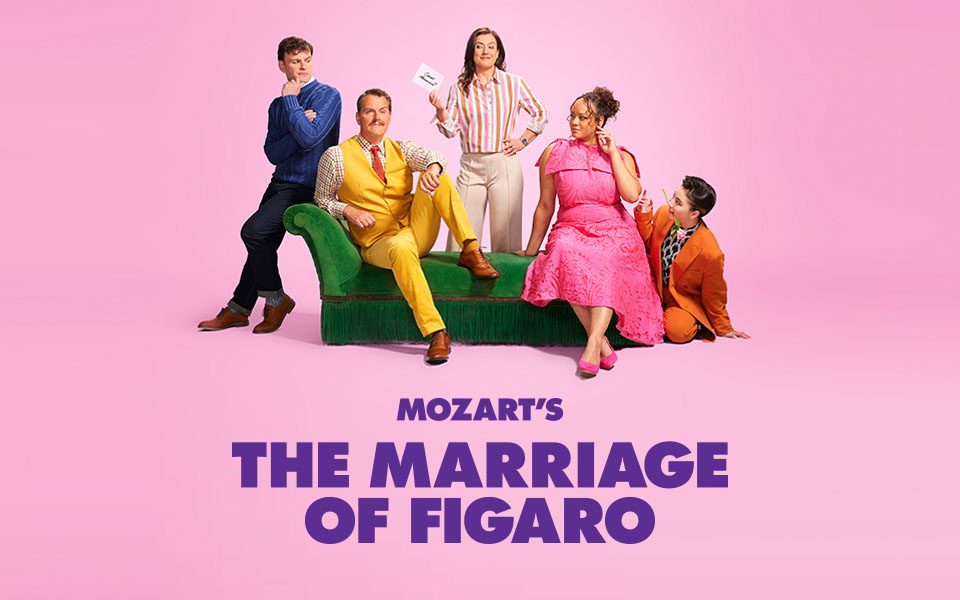
Hello again. Sorry for the gap in articles but there are a couple of reasons. The first is that January is traditionally a quiet month for new productions as the Christmas shows have lengthy runs; the second is that I was appearing in the theatre myself so obviously needed to prepare thoroughly. I was cast as a character called Arthur Rittick who needed a knee replacement, so, being a devotee of method acting, I lived the part. It wasn’t in one of the main playhouses but in Harrogate Hospital’s Operating Theatre. Trust me to make a mess of it, as no sooner were we all ready for the action to begin, I promptly fell asleep! When I was awakened from my slumbers I was surprised to learn that I had been incredibly convincing in my role, so await the letter informing me of the Olivier Award nomination. Fortunately Opera North supplied a brilliant piece of work to take my mind off the impending honour, and the ensuing pain!
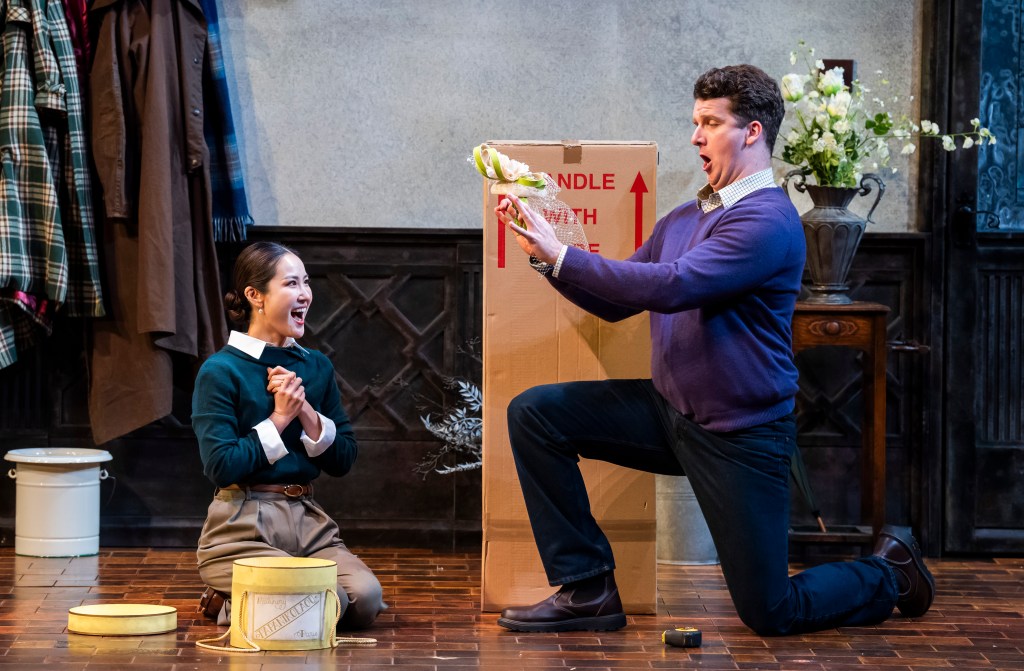
I have seen The Marriage of Figaro a few times before in various guises but this was by far the best. Although the action had been brought up to date, this seemed only to have been done to make the jokes funnier, which it did by changing the setting to a country house, and the servants, rather than being maids and gofers became more like administrators. The music and libretto were obviously original, but the way in which the latter was translated on the electric titles screens was modified to enhance the humour no end. My regular readers will know that I am not a fan of gratuitously altering original masterpieces so as not to offend the delicate sensibilities of modern audiences or introduce inclusivity for its own sake, but opera has always been fairly inclusive insofar as the ethnic origin of the performers was concerned, they only wanted the best singers. Just as well for British performers, as most of the great works are Italian or German.
It is also a comic opera, and comedy relies on the audience being able to identify with a situation or turn of phrase which completes the joke, so archaic words, idioms and attitudes of centuries past often fail to hit home. They have not been totally ignored here, mention is still made of the feudal practice of the Lord of the Manor being able to exercise his right to sleep with a member of his household staff on her wedding night. By not invoking this ‘perk’, however, meant that Count Almaviva had to pursue a more current means of leverage to satisfy his lust i.e. by relying on his entitlement and employing coercion.
Normally, this would be the point at which I relate the synopsis but in this case it is so convoluted that I would still be writing it when the run had finished. Broadly speaking, the action takes place over one day in a country house where both Figaro, the Count’s steward, and Susanna, the Countess’s assistant, are preparing for their wedding that evening. They are settling into the room which has been given to them by the Count, not so much out of magnanimity but more so that Susanna, for whom he has a thing, is within striking distance. Obviously the Countess is not best pleased at this, especially as she has just discovered she is pregnant.
The Count’s page, Cherubino, an adolescent lad who fancies anything female with a pulse, especially the Countess, is discovered trying to get jiggy with the daughter of Antonio, the gardener and Susanna’s uncle. The Count agrees to find him a place in the army and send him to where he will not be so tempted.
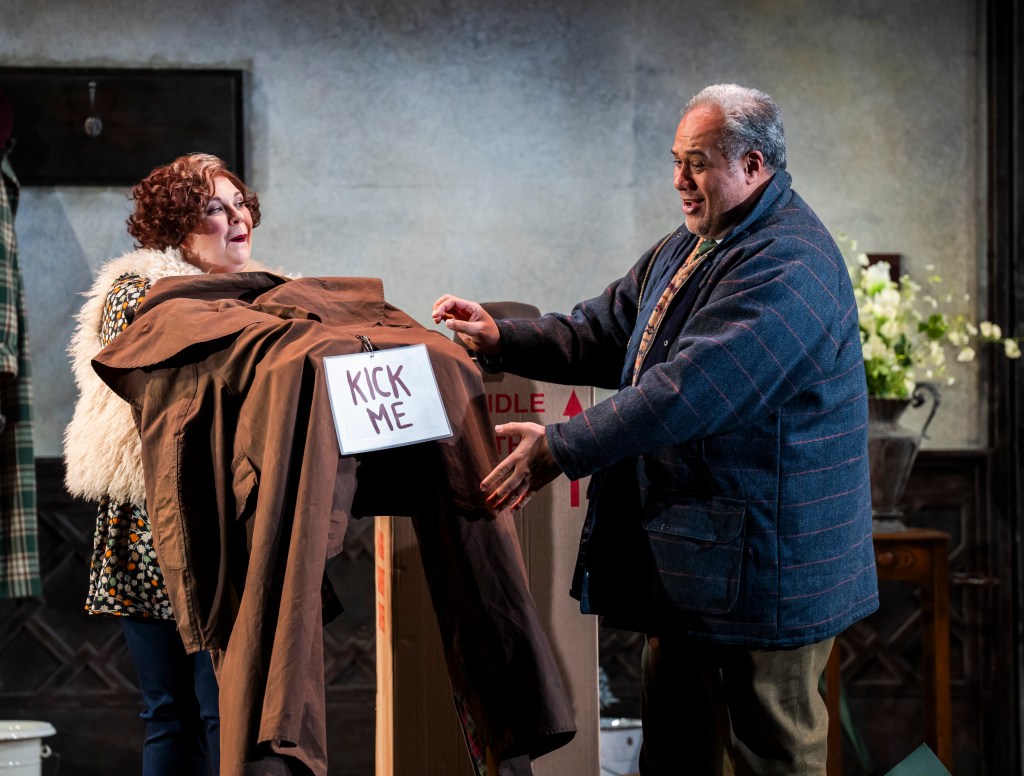
A major problem concerning the wedding is that Marcellina, a former housekeeper, has lent Figaro some money and there is a clause in the contract which stipulates that, should the loan not be repaid, he will have to marry her. This is resolved when it transpires that Figaro is the son of Marcellina, whom she abandoned at birth – don’t ask!
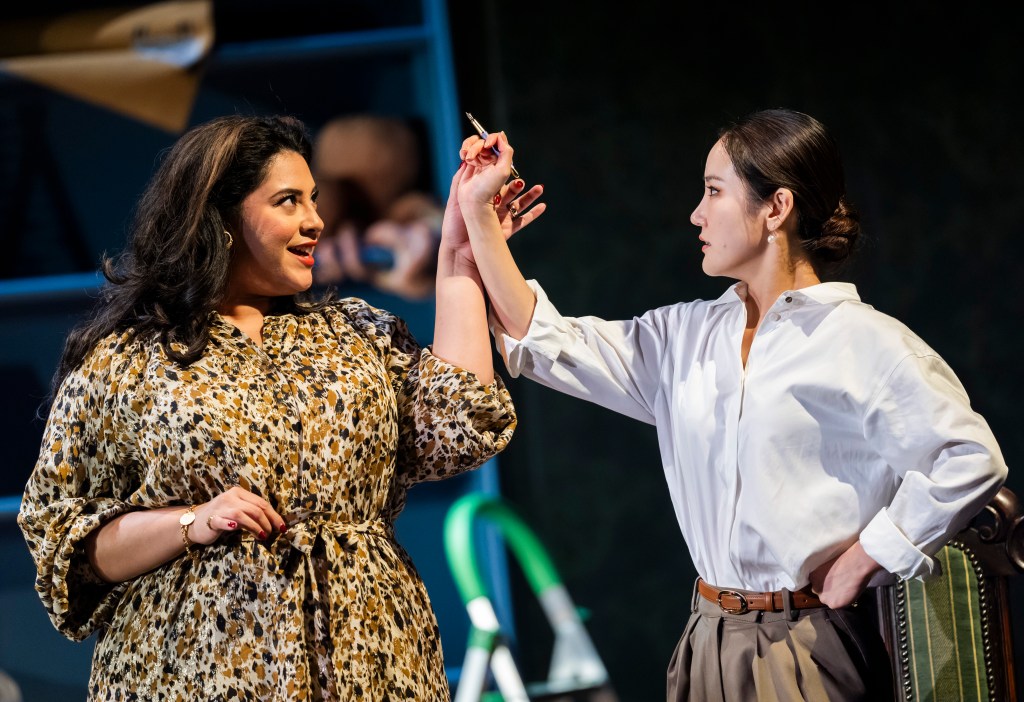
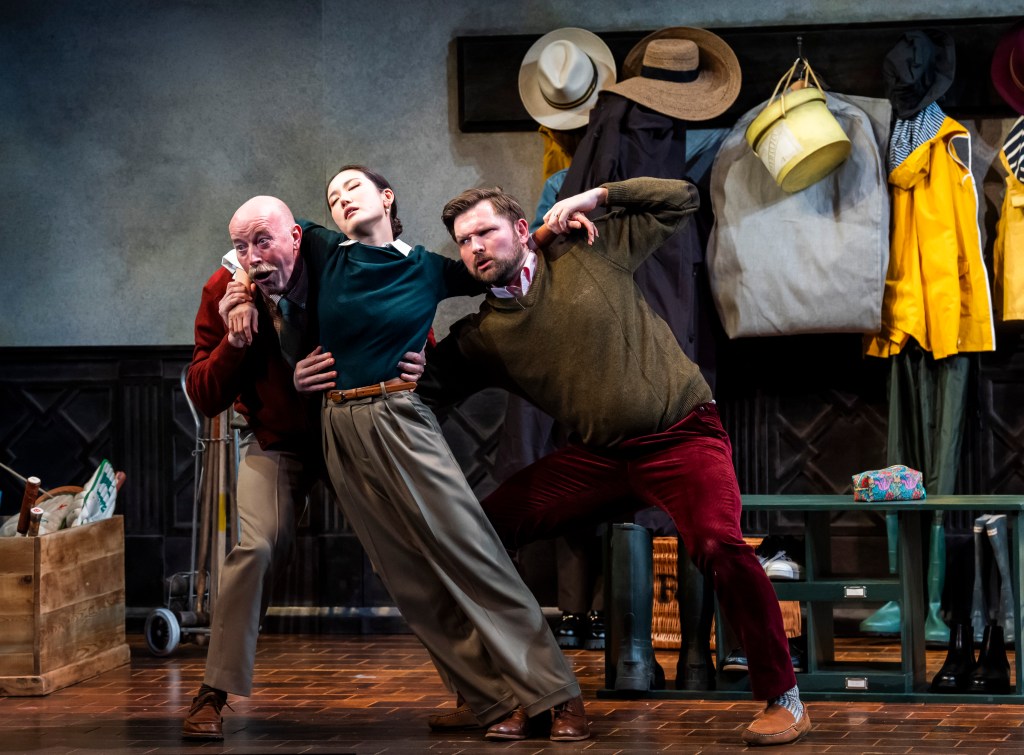
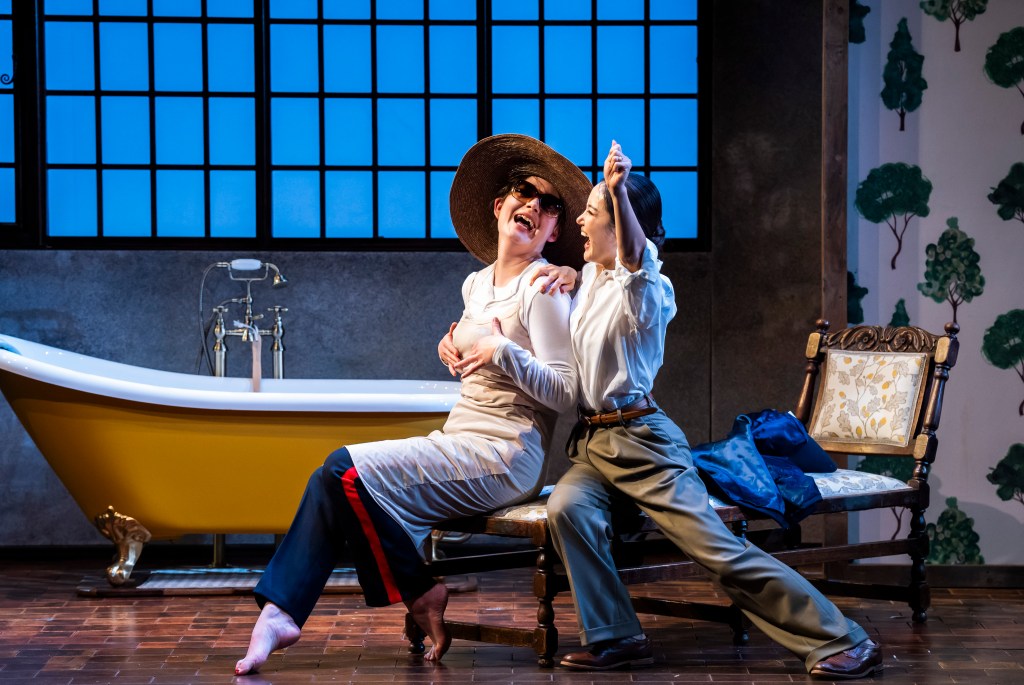
There follows a series of notes passed to the Count, ostensibly from Susanna, inviting him to a tryst in the garden, with the intention of exposing his intended infidelity. At first it is suggested that Cherubino dons drag and attends in her place, but after that plan is thwarted, Susanna and the Countess, disguise themselves as each other and try to entrap him that way. Having got wind of the plot, Figaro sneaks to the meeting place as well and all kind of mayhem ensues.
Needless to say, all ends well with the wedding of Figaro and Susanna. The Count repents by devoting himself to his wife and the pending offspring and Marcellina gets together with her long-time ‘friend’, Bartolo.

Once again Opera North has assembled an amazing cast of singers, all of whom were on top of their game. What really impressed me though was the acting element of the performances. Comedy is difficult to master at the best of times but when the plot is as bonkers as this, it is easy to turn it into a parody of itself. Here, the singers mainly played it straight which added a bit more sophistication to the proceedings. There were eccentric characters, such as Bartolo, Basilio and Marcellina, sung by Jonathan Lemalu, Daniel Norman and Katherine Broderick respectively, but even they managed a modicum of restraint.
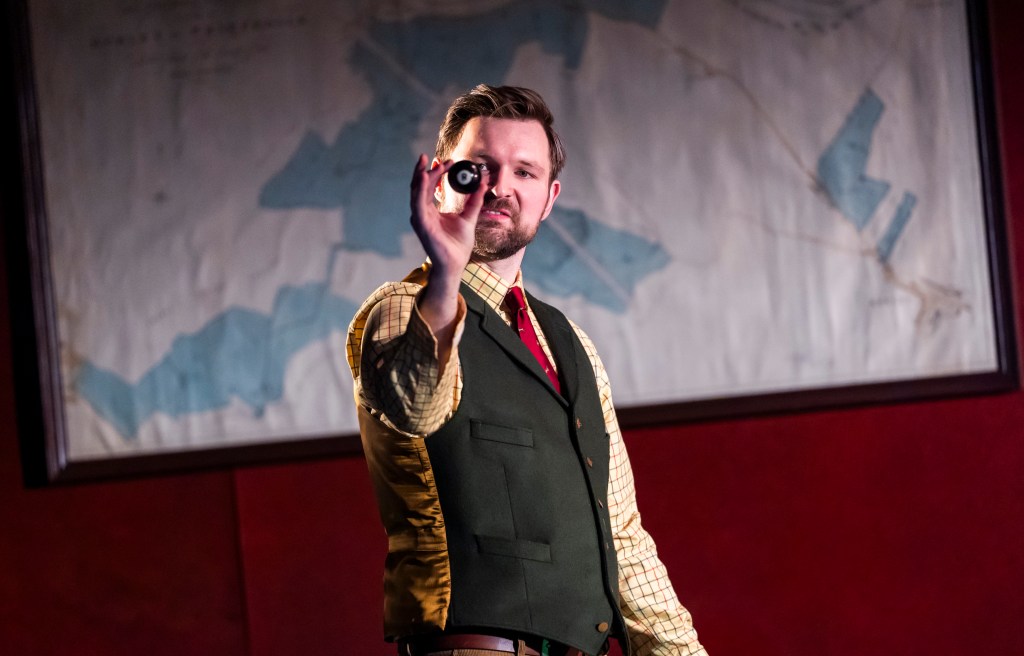
The leads were superb with Count Almaviva – James Newby – exuding an air of entitlement whilst Figaro – Liam James Karai – was always having to think on his feet to constantly amend plans which needed to change in an instant. The leading ladies, Countess Almaviva – Gabriella Reyes – and Susanna – Hera Hyesang Park, worked well together in trying to get one over on the Count, the former doing this whilst also attempting to avoid the advances of Cherubino, who, although ostensibly a young lad, was sung by a woman Honing Wu! This came in handy when they had to pretend to be female to entrap the Count, but was a bit odd when they were pretending to be a boy pretending to dress up as a woman. Well, it is opera.
Obviously the music was superb, with tunes familiar to those with no opera knowledge whatsoever, as they have been used in countless soundtracks and adverts, but it was taken to another level by the wonderful Orchestra of Opera North, conducted by Valentina Peleggi. The Chorus of Opera North was also in evidence, playing extras throughout the piece.
The creatives; Set and Costume Designer, Madeleine Boyd, Lighting Designer, Malcolm Rippeth and Choreographer, Rebecca Howell all combined to bring to life the vision of Director, Louisa Muller, who injected so much fun into the piece.
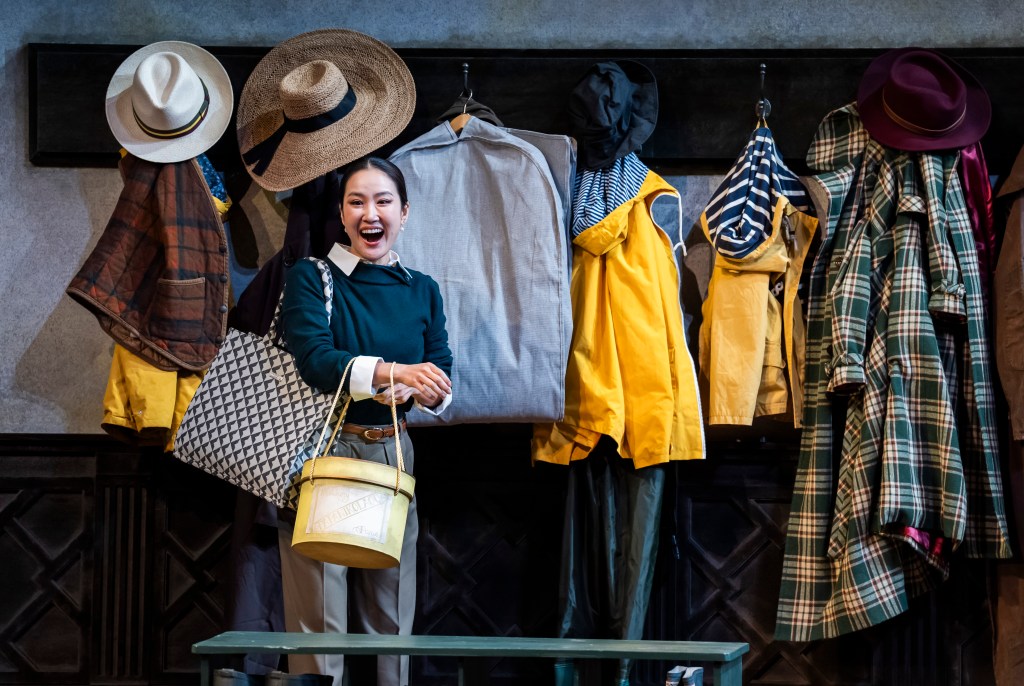
From the very beginning, as the overture was being played, the staff of the Manor were clocking on and depositing their outdoor clothes on their respective pegs, they each also brought a bunch of flowers with them, discarding the ones placed in a vase, even though they had only just been put there by the previous employee. They then sabotaged the Count’s garments as they deposited their own.
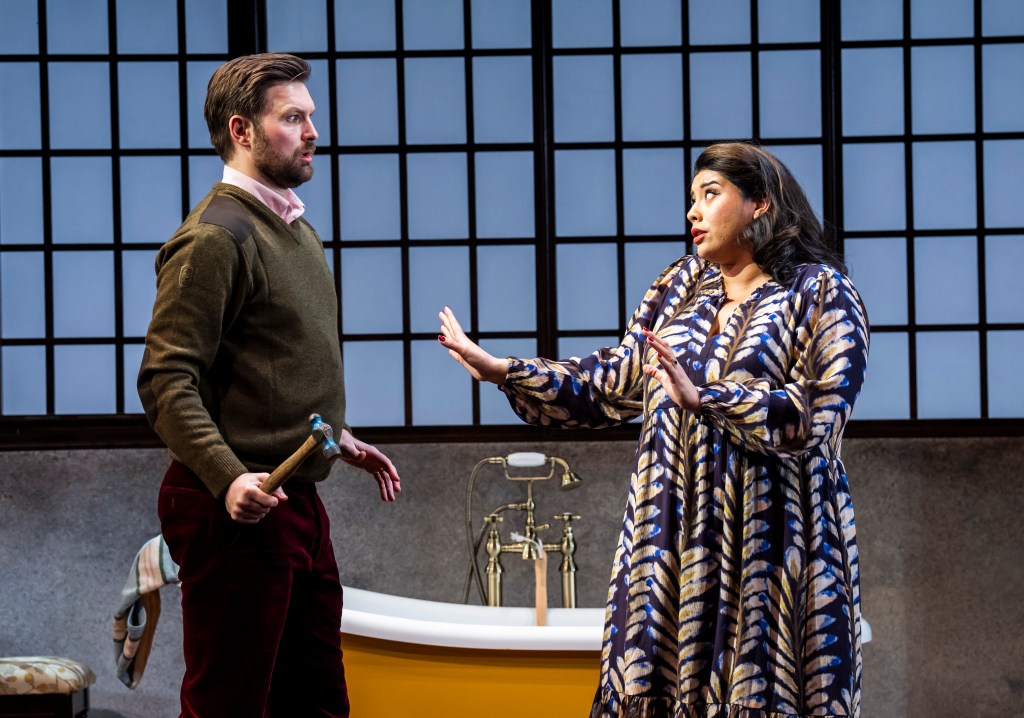
The state of dilapidation of the Manor was amusingly done with various household staff – chorus members – strategically placing buckets on the floor to catch the rain leaking through the roof. They also became members of guided tours around the pile who could be seen being herded through the rooms at the rear, before mingling with the principal characters on stage, pausing to take photos with their mobiles of the Count and Countess.
I enjoyed every aspect of this opera and would recommend that you go along to see it should you get the chance. There are several offers available via the Opera North website, so why not give it a go, it is a perfect introduction if you are contemplating dipping in a toe to test the water. https://www.operanorth.co.uk/your-visit/new-to-opera/ If you are a regular, there are also package deals available for the whole season at multiple locations. https://www.operanorth.co.uk/your-visit/packages/
The Marriage of Figaro plays on various dates at Leeds Grand Theatre until 20th February, after which it moves on to Theatre Royal, Nottingham on 5th and 7th March, Lowry, Salford Quays, 12th and 14th March, Newcastle Theatre Royal, 19th and 21st March, ending at Hull New Theatre on 26th and 28th March. For full details of all Opera North productions, please go to https://www.operanorth.co.uk/
For shows at Leeds Heritage Theatres see https://leedsheritagetheatres.com/whats-on/
Photographs by Tristram Kenton

